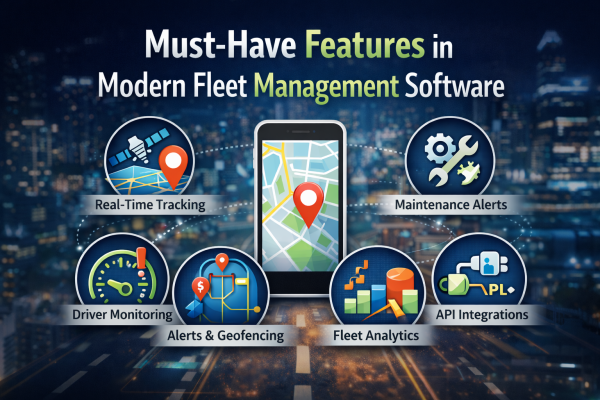
Discover the essential features every modern fleet management software must have, from real-time GPS tracking and driver behavior monitoring to analytics, maintenance, and integrations.
Fleet management software has evolved far beyond basic vehicle location tracking. Today’s fleets demand intelligent, scalable, and data-driven platforms that improve efficiency, safety, and profitability. Whether you manage a small fleet or a large enterprise operation, choosing the right software depends on the features it offers.
Below are the must-have features every modern fleet management software should provide.
📍 1. Real-Time GPS Tracking
At the core of any fleet system is real-time vehicle tracking. This feature allows fleet managers to monitor vehicle locations, movement status, and trip progress instantly.
Benefits include:
- Better dispatch and route planning
- Faster response to delays or incidents
- Improved customer service with accurate ETAs
Real-time tracking ensures complete visibility across your fleet at all times.
🚨 2. Smart Alerts & Geofencing
Modern fleet software should provide customizable alerts for key events such as:
- Speeding
- Excessive idling
- Unauthorized movement
- Geofence entry and exit
These alerts help enforce policies, reduce misuse, and improve driver accountability without constant manual monitoring.
👤 3. Driver Behavior Monitoring
Driver behavior directly impacts fuel consumption, safety, and maintenance costs. Fleet management software must include tools to monitor:
- Speeding
- Harsh braking and acceleration
- Driving patterns
With these insights, businesses can promote safer driving habits, reduce accidents, and lower insurance costs.
🛠️ 4. Maintenance & Service Management
Preventive maintenance is critical to minimizing downtime. A modern fleet platform should support:
- Mileage-based service reminders
- Engine hour tracking
- Maintenance history records
This feature helps extend vehicle lifespan and avoid costly unexpected breakdowns.
📊 5. Reports & Fleet Analytics
Data-driven decision-making is essential in modern fleet operations. Fleet management software should offer:
- Trip and distance reports
- Idle time analysis
- Vehicle utilization insights
- Exportable and shareable reports
Clear analytics help identify inefficiencies and measure performance improvements over time.
📱 6. Mobile Applications
Fleet operations don’t happen only at a desk. A modern system must include mobile apps for:
- Fleet managers
- Supervisors
- Drivers
Mobile access ensures real-time updates, alerts, and operational control anytime, anywhere.
🔗 7. API & System Integrations
The best fleet management platforms integrate seamlessly with other business systems, including:
- CRM and ERP software
- Dispatch systems
- Fuel cards and accounting tools
Open APIs allow businesses to build connected workflows and reduce manual data entry.
🔒 8. Security & Data Protection
With increasing data regulations, fleet software must provide:
- Secure data transmission
- User access control and permissions
- Activity logs and audit trails
Strong security ensures compliance and protects sensitive fleet and location data.
☁️ 9. Cloud-Based Scalability
Modern fleet management software should be cloud-hosted to provide:
- Easy scalability as fleets grow
- Automatic updates and improvements
- Access from multiple locations
Cloud platforms reduce IT overhead and support long-term growth.
✅ Final Thoughts
Choosing fleet management software is a strategic decision that impacts cost control, safety, and operational efficiency. The right platform combines real-time tracking, automation, analytics, and flexibility to support both current needs and future growth.
Businesses that invest in feature-rich, modern fleet management software gain a competitive advantage in today’s data-driven logistics and transportation environment.
Looking for fleet software with all the essential features?
👉 Request a Demo and see how NavioTrack delivers complete fleet visibility and control.